
Does a Higher RTP Mean a Slot Is Better? A Practical Guide

Does a Higher RTP Mean a Slot Is Better? A Practical Guide

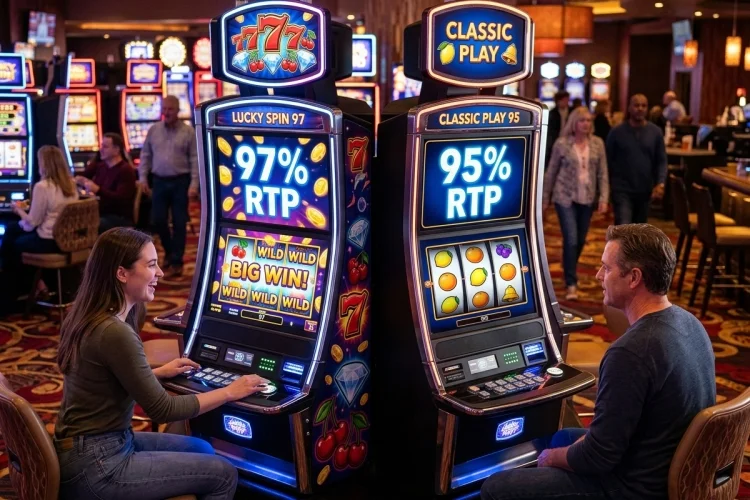
A 97% RTP looks better than 95% when the two numbers are sitting next to each other. That makes it tempting to assume the first slot must always be the smarter or more enjoyable choice.

But Does a Higher RTP Mean a Slot Is Better? Not automatically. RTP describes theoretical long-term return, while factors such as volatility, bonus design, hit distribution, and game mechanics determine how the slot actually feels to play.

A higher percentage can be mathematically favorable over huge samples, but it does not guarantee better results during one session.

What Does RTP Actually Measure?

RTP stands for Return to Player.

Gaming Laboratories International defines percentage RTP as the expected percentage of wagers that a game returns to players over the long run. Testing can use mathematical evaluation or simulation depending on the game’s structure.

For example, a theoretical 96% RTP means the game is mathematically designed to return approximately 96% of wagered value across a sufficiently large sample.

It does not mean someone depositing $100 should expect to finish with exactly $96.

The UK Gambling Commission emphasizes that actual RTP can move significantly above or below theoretical RTP when only a limited amount of play has been measured.

Higher RTP Means a Lower Theoretical House Edge

If everything else were identical, a higher RTP would generally be mathematically preferable.

A 96% RTP corresponds to a theoretical house edge of 4%, while a 94% RTP corresponds to 6%. Over extremely large volumes of identical wagering, that two-percentage-point diffrence matters.

However, “everything else being identical” is the important part.

Slots with different RTPs often also have different volatility levels, bonus structures, maximum wins, paylines, and feature mechanics.

That is why an RTP comparision should be treated as one specification rather than a complete rating of the game.

Volatility Can Change the Experience Completely

Volatility describes how prizes are distributed.

The UK Gambling Commission says highly volatile games can contain prizes in the “very large but rare” category, while lower-volatility games tend to have more prizes that are “small and often.”

That means two slots with similar RTP figures can feel nothing alike.

One may produce more regular small results. Another may have longer stretches without significant returns while concentrating more of its mathematical value in occasional larger events.

Neither experience changes the meaning of RTP.

It simply shows why RTP alone cannot explain how smooth or uneven a session might feel.

Starburst Shows Why Lower Volatility Matters

NetEnt’s Starburst provides a useful example.

Evolution lists the game with a 96.09% RTP and Low/Mid volatility. It uses five reels, three rows, 10 paylines, and an Expanding Wild feature that can trigger respins.

The game does not have the highest RTP imaginable, but its lower volatility profile creates a different type of experience from more aggressive high-variance titles.

Someone who values a relatively simple game with smaller swings may prefer that structure even if another slot advertises a slightly higher return percentage.

In other words, higher theoretical return does not automatically equal a more enjoyable experiance.

Dead or Alive 2 Has Higher RTP but Much Higher Volatility

Now compare Starburst with Dead or Alive 2.

Evolution lists Dead or Alive 2 at 96.80% RTP, which is higher than Starburst’s 96.09%. However, Dead or Alive 2 is categorized as High Volatility and offers potential wins up to 100,000x the original stake.

If RTP alone determined which game was “better,” Dead or Alive 2 would seem like the obvious choice.

But the games are designed very differently.

Dead or Alive 2 concentrates substantial potential inside its Free Spins modes and has a much more aggressive variance profile. Starburst offers simpler mechanics and lower volatility.

The preferable game therefore depends partly on what kind of experience someone wants.

Higher RTP Does Not Protect a Short Session

One of the biggest misunderstandings around RTP is treating it like a personal cashback percentage.

The UK Gambling Commission provides an example of a game designed with 91.68% theoretical RTP producing an actual measured RTP of only 90.42% during one reporting period. The regulator explains that volatility creates a wider acceptable range when the sample remains limited.

As the number of rounds increases, actual performance should generally move closer to the theoretical figure.

That process happens across large amounts of play.

It does not mean an individual who has received less than the advertised RTP is suddenly due compensating wins.

A 97% RTP slot can still produce a very poor short session.

RTP Does Not Tell You How Often You Win

RTP measures returned value, not winning frequency.

Imagine two hypothetical games with the same 96% RTP. One could produce many small prizes, while another could return much of its value through fewer larger outcomes.

Their theoretical return would be identical, but their hit patterns could be completely different.

That distinction is partly why testing laboratories evaluate more than just RTP.

GLI notes that its mathematics analysis can examine the return contribution from the base game, feature games, jackpots, and volatility.

A complete mathematical model therefore involves considerably more than one percentage.

Bonus Features Can Matter More to Enjoyment

Some players choose slots mainly for free spins, Wild mechanics, cascading symbols, or collection bonuses.

Those features do not disappear simply because another game has a slightly higher RTP.

A slot with a 96.5% RTP but features you find confusing may be less enjoyable than a straightforward 96% game you understand immediately.

Likewise, someone who enjoys high-volatility bonus rounds may prefer a game with wider swings.

RTP is useful when comparing mathematical value, but entertainment preferences remain seperate from the percentage.

Read the paytable and bonus rules alongside the return figure.

Check the Exact RTP Version

Another important detail is that some games can exist with more than one RTP configuration.

Evolution, for example, lists its Superstars slot with RTP options of 96.08%, 94.06%, and 92.01%.

That means knowing the title alone may not always be enough.

The version offered by a particular operator can matter.

For this reason, check the in-game information screen rather than relying on an RTP number from an old review or another website.

The exact configuration available where you play is the relevant one.

Does a Higher RTP Mean a Slot Is Better? It means the mathematical long-term return is higher, but that is only one part of the picture. Volatility, bonus mechanics, hit distribution, and personal preferences also matter.

Compare the exact RTP alongside the game’s rules and volatility, and never assume a higher percentage guarantees better results during a short session.

Online Slot Myths About RTP, RNGs and Winning Streaks

Online Slot Myths About RTP, RNGs and Winning Streaks

Slot statistics are easy to misunderstand because they describe long-term mathematics, while players experience only short sessions.

A published RTP might be 96%, yet someone can lose their entire balance within minutes. Another player may receive two bonuses close together and assume the game has entered a winning cycle.

These experiences fuel many Online Slot Myths about payout percentages, random number generators, volatility, and betting size. The myths often begin with a real observation but reach the wrong conclusion.

The key is separating what a game’s mathematics describes from what it can guarantee. RTP, volatility, hit frequency, and maximum wins all provide useful information, but none can reveal the next spin.

RTP Is Not Cashback

Return to player represents the theoretical proportion of total wagers paid back as prizes over extensive play. It is not a cashback feature attached to your account.

If a game has 96% RTP, its theoretical house advantage is approximately 4%. That does not mean a $100 session must lose only $4.

The Gambling Commission notes that players should not expect an advertised percentage to be returned during an individual session.

A Higher RTP Does Not Guarantee a Better Session

A game with 97% RTP has a stronger theoretical return than one with 94%, assuming all other factors and configurations are comparable. Short-term results can still move in the opposite direction.

The 94% game could produce a large early win, while the 97% title could deliver a complete loss. Random variance is much larger than the small percentage difference during limited play.

RTP becomes more informative across huge betting volumes. Operators monitor live performance over sufficiently large samples because small datasets produce very wide and unreliable ranges.

Volatility Is Not the Same as RTP

Volatility describes how widely results tend to vary. A lower-volatility slot usually distributes more value through smaller outcomes, while a highly volatile game may depend more heavily on rare prizes.

Two titles can share the same RTP while feeling completely different. One may keep the balance moving through regular small returns, while another produces long quiet stretches followed by occasional large wins.

Regulatory monitoring guidance explains that highly volatile games have wider expected performance ranges and often contain prizes that are large but uncommon.

More Paylines Do Not Automatically Mean Better Odds

A game advertising thousands of ways to win may create more possible combinations than a traditional payline slot. That does not mean every spin is more likely to return a profit.

The paytable, symbol frequency, reel mapping, and prize values are designed together. Adding more winning ways can be balanced by smaller payouts or different symbol probabilities.

Use the displayed RTP and rules to compare the complete mathematical model. Do not assume that a larger ways-to-win number automatically improves value.

Higher Stakes Do Not Unlock Better Luck

Betting $2 instead of $0.20 can make the same winning combination worth ten times more. It also makes each losing round cost ten times more.

Some jackpots or special features may require an eligible stake, but that rule should be clearly explained. Outside those stated conditions, a bigger wager does not tell the RNG to produce a better result.

Random outcomes must follow their expected probabilities, and adaptive changes during play are prohibited under UK standards.

Winning Streaks Do Not Reveal a Cycle

A sequence of wins can feel like evidence that the slot is hot. In reality, random data naturally contains clusters and streaks.

Flip a fair coin repeatedly and you will eventually see several heads in a row. The sequence does not prove that the coin has entered a “heads cycle.”

A secure software RNG is designed to produce output that is computationally unpredictable without knowledge of its algorithm and seed.

Maximum Wins Are Rare by Design

The advertised top prize shows what the mathematical model permits. It does not describe an ordinary result or realistic session target.

A maximum win may require several rare events to occur together, such as entering a bonus, landing special symbols, and reaching the largest multiplier. The probability may be far lower than the headline suggests.

Read the maximum exposure and feature rules for context, but choose a game according to understandable mechanics and affordable stakes rather than its dream outcome.

Live Monitoring Does Not Remove Losing Sessions

Regulated operators may monitor actual win and turnover data to identify games performing outside expected ranges. This can help reveal configuration or software problems.

The process does not make every account finish near the advertised RTP. Monitoring uses aggregated data and considers the title’s volatility and volume of play.

A game can be operating correctly while one player experiences a severe loss. Fair randomness and guaranteed personal outcomes are completely different ideas.

Many Online Slot Myths begin by applying long-term statistics to short-term play. RTP is not personal cashback, volatility is not another word for payout percentage, and a high stake does not unlock better luck.

Winning streaks are possible without revealing a predictable cycle, just as long losing runs can occur without proving that a game is faulty. Compare the exact RTP, volatility, stake range, and feature rules shown inside the title.

Use demos to understand the interface rather than measure profitability. Most importantly, establish your spending limit before playing and never increase it because a mathematical average appears to promise a recovery.

Play’n GO Slots for Beginners: How to Choose a Game

Play’n GO Slots for Beginners: How to Choose a Game

Opening a catalogue containing hundreds of online slots can feel like browsing a streaming service without knowing which genre you enjoy. Every game has colorful artwork, but the rules behind those images can vary significantly.

Some Play’n GO Slots use straightforward reels and paylines. Others reward connected clusters, remove winning symbols, fill feature meters, or give individual characters special powers.

Beginners do not need to learn all of these mechanics at once. A better approach is to begin with a clear format, study one main feature, and use free-play mode until the rules make sense.

This guide explains how to select a suitable first game without treating any slot as a guaranteed way to make money.

Begin With a Familiar Reel Layout

A three-reel or five-reel game is normally easier to read than a large grid. Fewer visible positions make it simpler to understand where matching symbols must land.

Fire Joker is a useful starting point. The game uses three reels, familiar fruit symbols, a wild Joker, and a respin feature involving stacked icons.

The controls and win structure are relatively compact, allowing beginners to focus on the paytable rather than several simultaneous bonus systems.

Move to Free Spins and Expanding Symbols

Once traditional reels feel comfortable, try a game with a recognizable free-spins round.

Book of Dead uses its Book symbol as both a wild and scatter. Landing three or more Books activates free spins, and one regular symbol becomes a special expanding icon during the feature.

This structure introduces three common ideas-wild substitutions, scatter triggers, and expanding symbols-without changing the basic five-reel layout.

Try Cluster Games When You Are Ready

Cluster games do not require matching symbols to follow fixed lines. Instead, a specified number of identical symbols must touch horizontally or vertically.

Reactoonz uses a seven-by-seven grid and requires clusters of at least five matching aliens. Winning symbols disappear, and replacements fall into the empty positions.

These chain reactions can charge feature meters, so the game is more complicated than Fire Joker. Keep the paytable open until you can recognize a qualifying cluster without relying entirely on animations.

Choose One Feature Style at a Time

Different series emphasize different mechanics. The Dead series commonly uses expanding symbols and free spins, while Reactoonz focuses on clusters, cascades, and energy meters.

Moon Princess games use character abilities. Love, Star, and Storm can alter the grid in different ways, creating additional winning opportunities during cascading sequences. Moon Princess Origins updates this structure with stronger character progression.

Playing one feature style at a time makes it easier to decide what you genuinely enjoy.

Check RTP and Volatility Separately

RTP describes the percentage a game is mathematically designed to return across extensive play. It does not promise a specific return during one session.

A theoretical RTP of 96% does not mean a player wagering $100 will necessarily finish with $96. Short-term outcomes can sit far above or below the designed average.

Volatility describes how potential prizes tend to be distributed. A volatile slot may produce longer periods without meaningful returns, even when its RTP appears competitive.

Always check both figures inside the exact game version offered by the operator.

Use Free Demos to Test the Controls

Play’n GO provides official demos for its catalogue and states that no purchase is required. The virtual games do not provide cash prizes, cryptocurrency, or withdrawable free-spin winnings.

Use demo mode to locate the balance, virtual stake selector, information menu, and sound controls. Play slowly and observe what happens after every feature trigger.

After ten minutes, try to explain how a standard win forms, what the wild does, and how the bonus begins. Select a simpler game when those answers remain unclear.

Check Mobile Performance

Play’n GO began designing casino games for mobile phones before smartphones became widely available. That early mobile focus remains part of the company’s history and product approach.

Even so, individual games can feel different on smaller screens. Test whether the balance, stake, paytable, and feature descriptions remain easy to read on your device.

Avoid a game whose controls feel crowded or make accidental stake changes too easy.

Use Only Licensed Platforms

Play’n GO supplies software to casino operators; it is not itself the casino holding your account balance. The provider reports more than 400 games supplied in over 35 regulated jurisdictions.

You still need to verify that the operator is legally available in your location. Licensing, withdrawal rules, account security, and responsible-gambling tools belong to the casino platform.

Set your entertainment budget before opening a paid game, and never raise the stake to recover previous losses.

Choosing Play’n GO Slots becomes easier when you start with clear mechanics. Fire Joker introduces simple reels and respins, while Book of Dead adds free spins and expanding symbols.

Reactoonz is a logical next step for learning clusters, cascades, and feature meters. Test every game in free mode and check the information screen for RTP, volatility, stake limits, and bonus rules.

Make sure the controls work comfortably on your device and use only operators permitted in your jurisdiction. Start with one official demo today, learn its complete rules, and move to a more complex format only when you understand every major feature.

Highest RTP Slots Explained: How to Compare the Best Games

Highest RTP Slots Explained: How to Compare the Best Games

A 99% RTP sounds extremely generous. It may be tempting to assume that wagering $100 means you will receive approximately $99 back, but slot mathematics does not work on a personal session-by-session schedule.

The Highest RTP Slots have a relatively small theoretical house advantage, yet they remain random gambling games. One person may finish a short session ahead, while another may lose the entire amount they planned to spend.

To compare these games properly, you must look at theoretical return alongside volatility, hit frequency, features, and the exact version offered by the operator. Here is how to read the numbers without turning them into unrealistic promises.

Begin With the Meaning of RTP

RTP stands for return to player. It represents the percentage of total turnover that a game is mathematically designed to return as prizes over extensive play.

A slot with 99% RTP theoretically retains 1% of total wagers over the long term. A 96% title theoretically retains 4%. These figures describe the complete mathematical model rather than the experience of one person.

The UK Gambling Commission emphasizes that RTP is an average achieved over a significant number of games. Previous wins or losses do not alter the probability of the next result in a random game.

Calculate the Theoretical House Advantage

The basic relationship is easy to understand:

Theoretical house advantage = 100% − RTP

Book of 99 and Mega Joker both publish a 99% return, giving them an approximate theoretical house advantage of 1%.

By comparison, a game with 94% RTP has an approximate 6% theoretical advantage. The difference becomes meaningful across very large betting volumes, but it cannot predict the result of a few dozen spins.

Separate RTP From Volatility

RTP describes how much value is theoretically returned. Volatility explains how that value tends to be distributed.

A lower-volatility game generally focuses on smaller, more frequent outcomes. A high-volatility title may concentrate a larger portion of its return in rare bonus combinations or oversized prizes.

For example, 1429 Uncharted Seas combines a 98.6% return with low volatility and maximum exposure of 670 times the bet. A different slot could have a similar percentage while producing much wider balance swings.

Do Not Confuse Hit Frequency With Profitability

Hit frequency indicates how often a result classified as a win may appear. It does not tell you whether those winning rounds return more than the original stake.

A $1 spin that awards $0.40 may still trigger lights, sounds, and a winning animation. Financially, however, the balance has fallen by $0.60.

Mega Joker lists a 17% hit frequency, while Codex of Fortune lists 25%. Their RTP figures alone do not explain how large their ordinary results are or how much value sits inside bonus features.

Study Special Game Modes

A headline percentage may relate to the full mathematical design, including optional or separate modes. Mega Joker includes both basic and Supermeter gameplay.

Basic-mode winnings may be moved into Supermeter credits and used on the upper reels. The available bets and prizes in that mode are different from those in the standard game.

Before choosing any high-return slot, check whether the published figure depends on particular settings, strategies, side features, or bonus modes.

Confirm the Exact Casino Version

Never assume that the percentage quoted by a review automatically matches the game you open. Developers may certify or distribute multiple configurations.

Play’n GO has publicly described five general RTP levels for its slot catalogue: 96%, 94%, 91%, 87%, and 84%, with slight regional variation.

Open the information screen inside the live game. The theoretical RTP shown in the player-facing rules is the figure relevant to that version.

Compare Entertainment Value Too

A fractionally higher percentage is not very useful when the rules are confusing or the stake range does not fit your budget. Some players may prefer the traditional reels of Mega Joker, while others enjoy the expanding symbols in Book of 99.

Feature-focused players might prefer Codex of Fortune, with its keys, respins, free spins, and reward ladder.

Use demo mode to see whether you understand the game and enjoy its rhythm. Free results still cannot predict paid outcomes.

Comparing the Highest RTP Slots requires more than placing percentages in a table. Start with the theoretical return and house advantage, then examine volatility, hit frequency, bonus mechanics, and any special modes.

Confirm the exact RTP inside the game because configurations may differ. A 99% title has a smaller long-term mathematical disadvantage than a 94% title, but either game can produce a losing session.

Select a legal platform available in your location, choose a comfortable stake, and establish firm time and spending limits. Use RTP to make a more informed comparison-not as a reason to expect guaranteed returns.

Best Low Volatility Slots: How to Choose the Right Game

Best Low Volatility Slots: How to Choose the Right Game

Low-volatility slots are often recommended to beginners and recreational players, but the label does not tell you everything about a game.

Two titles in the same volatility category can have completely different reel layouts, bonus features, payout limits, and theoretical return percentages. Finding the Best Low Volatility Slots means looking beyond a casino’s promotional badge.

You should inspect the actual game rules, compare the RTP, test the controls, and decide whether the betting range fits your budget. The following steps provide a practical way to compare relaxed slot games without treating volatility as a guarantee of winning.

Start with the Meaning of Volatility

Low volatility usually means that a game’s prize distribution is weighted toward smaller and more frequent outcomes. High volatility generally involves larger but less common prizes and wider short-term swings.

Volatility does not tell you the overall theoretical return. A low-volatility game can have a lower RTP than a highly volatile alternative, so the two figures should always be assessed separately.

Compare RTP as a Long-Term Percentage

RTP is the game’s designed long-term return across a very large number of rounds. It is not a personal refund percentage and does not predict what will happen during one evening.

For example, a slot with a 96% RTP does not promise to return $96 after an individual player wagers $100. Short-term results can finish far above or below the theoretical figure because of random variation.

Look for a Clear Reel Structure

Casual players may prefer fixed paylines and a familiar five-reel layout. Starburst, for instance, uses five reels, three rows, and ten paylines. It has expanding wilds, respins, a 96.08% RTP, and maximum advertised exposure of 800 times the stake.

Its limited number of core features makes it easier to understand than slots containing several bonus meters, collectible symbols, and changing reel grids.

Decide How Many Features You Want

Low volatility does not necessarily mean simple gameplay. Arcader is officially categorized as low volatility, yet it uses five reels, 15 paylines, and maximum exposure of 1,600 times the bet. Its published RTP is 96.1%.

Before playing, check whether the features occur during ordinary spins or only inside a bonus. A game can feel uneventful when most of its entertainment is locked behind a difficult trigger.

Confirm the Information Inside the Game

Do not rely entirely on third-party reviews. Open the game’s information menu and look for the player-facing rules, RTP, paytable, stake range, and feature explanations.

In regulated markets such as Great Britain, online random-number-generated games must undergo appropriate testing before being released, and operators must monitor whether games perform according to their designed RTP.

Regulations and availability still differ by country, so use platforms that are legally authorized in your location.

Practice with a Free Demo

Demo mode lets you inspect the interface without risking money. Pay attention to how quickly spins finish, how clearly winning combinations are highlighted, and whether changing the stake is straightforward.

Demo results do not forecast real-money outcomes. Their real value is educational: they show whether you understand the rules and enjoy the game’s pace.

Set the Budget Before Choosing the Stake

A relaxed game can still become expensive when played quickly or at an excessive stake. Decide how much you can comfortably spend on entertainment and select a bet size that remains well within that amount.

GambleAware advises setting spending and time limits in advance and walking away once the planned budget has been lost. It also warns against continuing in an attempt to recover previous losses.

The Best Low Volatility Slots should match your preferred pace, feature complexity, and budget. Begin by separating volatility from RTP, then examine the reel structure, bonus rules, minimum stake, and maximum exposure.

Games such as Starburst and Arcader show that lower-volatility play can range from simple respins to more feature-driven formats. Try the free version first and confirm the specifications inside the actual casino game.

Finally, establish spending and time limits before the first real-money spin. Low volatility may create smaller swings, but only disciplined limits can control how much money and time you put at risk.

Online Slot Games for Beginners: How to Choose Your First Game

Online Slot Games for Beginners: How to Choose Your First Game

Picking your first slot should not feel like taking an exam. You only need a repeatable way to compare the available options before trying a free game.

Good Online Slot Games for Beginners usually combine readable rules, comfortable stake settings, and features that can be explained in one or two sentences.

This guide shows how to inspect a slot, test it without spending money, and decide whether its pace suits your budget.

The goal is not to uncover a secret winning machine. It is to choose entertainment you understand while avoiding features that make the cost or risk difficult to follow.

Begin with Reels and Paylines

Start by checking the game layout. A five-reel, three-row slot with ten fixed paylines is generally easier to read than a large grid containing thousands of possible combinations.

Starburst is a useful example. It has five reels, three rows, and ten paylines, while its main expanding-wild feature triggers a respin. This clear structure helps new players see why a spin produced a particular result.

Understand What RTP Actually Means

RTP stands for return to player. It represents the theoretical percentage returned as prizes over a very large number of rounds, not what one person should expect during a short session.

For instance, a stated RTP of 96% does not mean a player will receive $96 after wagering $100. Short sessions can vary widely, and previous spins do not make a future win “due.”

Match Volatility to Your Comfort Level

Volatility describes how prizes tend to be distributed. Lower-volatility games generally produce smaller, more frequent outcomes, while highly volatile slots are associated with larger but rarer prizes.

Beginners may find lower or medium volatility easier to follow because the balance can move less dramatically. Because labels sometimes vary between providers, check the official paytable instead of relying only on a casino badge.

Use Demo Mode Before Depositing

A free demo lets you learn the controls and bonus rules without putting money at risk. Official developer pages provide practice versions of numerous games, including titles such as Fire Joker and Book of Dead.

Try the Five-Minute Test

Play slowly for five minutes and answer three questions. Can you explain how a normal win forms? Do you understand the wild and scatter symbols? Can you change the stake without opening several menus?

When the answer is no, choose a simpler title. Confusing mechanics become a serious problem when every click can involve real money.

Compare One Main Feature at a Time

Your first slot does not need free spins, jackpots, multipliers, cascades, and a bonus-buy option all at once. Learning one core feature makes it easier to understand what is happening.

Book of Dead centers on free spins and a special expanding symbol. Big Bass Bonanza adds a collector wild during its bonus round. Both have recognizable five-by-three layouts, but their bonus behavior is different enough to demonstrate two common mechanics.

Check Mobile Controls and Game Information

Test whether the paytable, stake control, balance, and session tools remain readable on your phone. Small buttons or hidden menus can lead to accidental changes in the stake size.

Confirm the RTP displayed within the actual game rather than relying entirely on a third-party review. The theoretical percentage should be available through the player-facing rules or information screen.

Set Limits Before the First Spin

Decide your spending and time limits before playing. For example, a $10 entertainment budget should remain $10, even when the balance falls quickly or a bonus appears to be close.

GambleAware recommends setting spending and time limits in advance. It also warns against trying to recover lost money by continuing to gamble, commonly known as chasing losses.

Choosing Online Slot Games for Beginners becomes easier when you focus on clarity rather than hype. Look for a readable reel layout, check the in-game RTP, select a comfortable volatility level, and practice in demo mode.

Learn one feature at a time instead of immediately opening the most complicated release. Before using real money, confirm that the operator is legal in your jurisdiction and that the controls work properly on your device.

Create a small entertainment budget and a firm stopping time, then stick to both. Open a demo, inspect its paytable, and see whether you can explain the game before considering a deposit.